
Themes of the Casino Screen
Cinema Legacy organises its archive not only by era but by the recurring ideas that have shaped how casinos, poker, and gambling have been portrayed on screen. These themes travel across decades, connecting films from the silent era to the present.
Themes are not genres but motifs: the heist, the poker table, the Las Vegas skyline, the casino manager, the crime narrative, the private card room, and the architecture of spectacle. Each theme is explored through multiple films, showing how representation has shifted with cultural and industrial changes.
Seven Recurring Motifs
The following themes recur throughout casino and poker cinema, each with its own evolution across eras. Select a theme to explore its overview below.
The Evolution of the Casino Heist
1900s–2020sPoker on Screen Through the Decades
1930s–2020sLas Vegas in Cinema
1930s–2020sCasino Managers, Dealers and Players
1930s–2020sCrime and the Casino Movie
1900s–2020sFrom Private Card Rooms to Spectacle
1930s–2020sHow Casino Architecture Changed on Screen
From Silent Capers to Ensemble Spectacles
The casino heist has evolved from a simple plot device in early crime films to a complex narrative structure that often explores themes of greed, loyalty, and technological change. Early films often used the heist as a straightforward caper with clear moral outcomes. The 1950s and 1960s introduced more cynical takes, reflecting post-war anxieties. Contemporary films often blend the heist with character-driven drama, using the casino as a microcosm of risk.
Key Shifts in Representation
The heist's portrayal has shifted from focusing on the mechanics of the crime to exploring the psychological motivations of the characters involved. The rise of surveillance technology in films mirrors real-world casino security developments. Within this retrospective, the heist can be read as a metaphor for broader societal anxieties about luck and control.
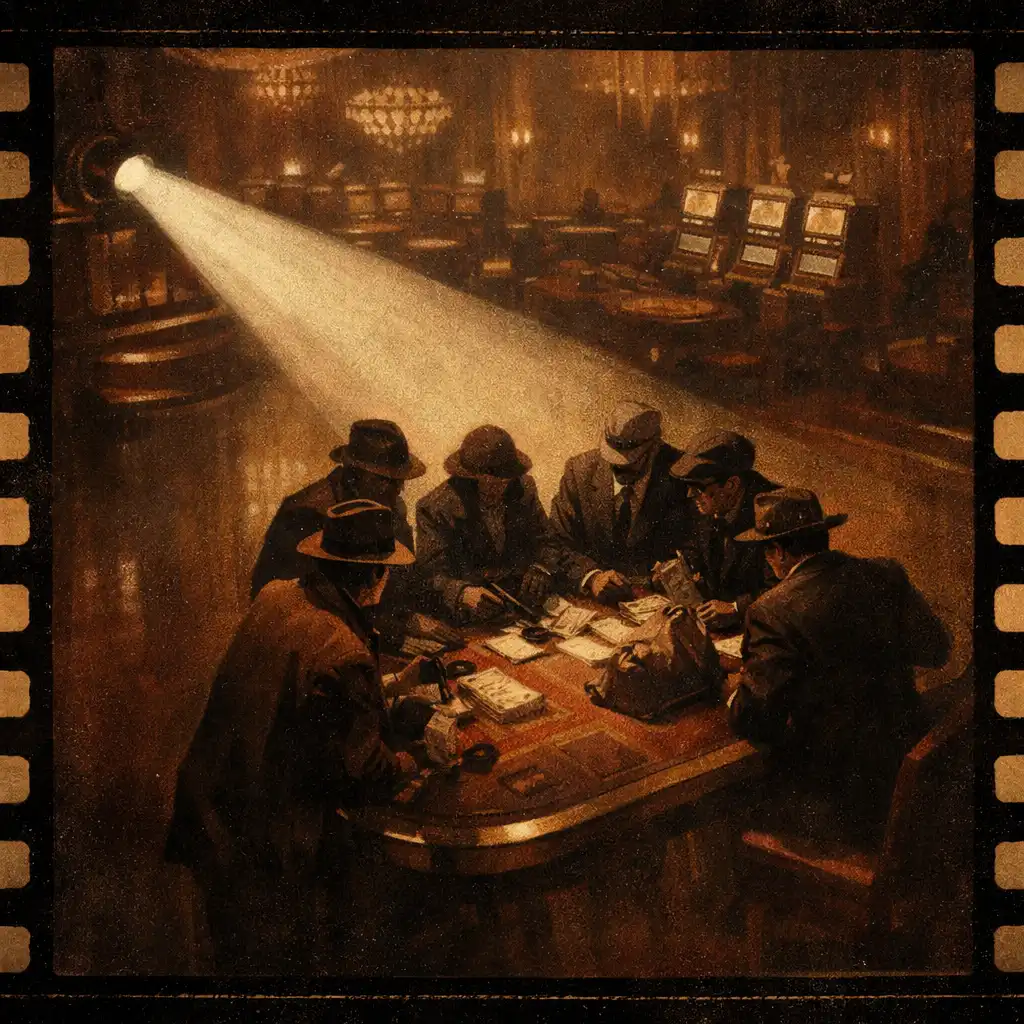
The casino heist endures because it turns the house's own promise of chance into a stage for human calculation.

From Backroom Games to Televised Tournaments
Poker's screen presence has shifted from a backdrop for character interaction to a central dramatic device, often used to reveal personality and power dynamics. Early films often used poker as a social setting, with the game itself secondary to the dialogue. The poker boom of the 2000s led to films that focused on the mechanics and psychology of tournament play. Poker scenes frequently use close-ups of cards and chips to build tension.
The Poker Table as a Stage
The poker table often functions as a theatrical stage where characters reveal their true natures through bluffing, risk-taking, and observation. The close-up on a player's face during a key hand is a recurring visual motif. The game's rules provide a ready-made structure for dramatic tension.
From Desert Oasis to Neon Metropolis
Las Vegas has served as a cinematic shorthand for risk, opportunity, and moral transgression, evolving from a glamorous desert retreat to a sprawling urban spectacle. Early films often depicted Las Vegas as a place of escape and fantasy. The 1970s and 1980s brought a grittier, more cynical view, reflecting the city's changing reputation. Contemporary films often use Las Vegas as a backdrop for stories about excess and reinvention.
The City as a Character
Las Vegas often functions as more than a setting; its architecture, lighting, and atmosphere can drive the narrative and reflect the characters' inner states. The neon glow of the Strip is a recurring visual motif. The contrast between the casino floor and the desert outside is often used to highlight themes of illusion and reality.
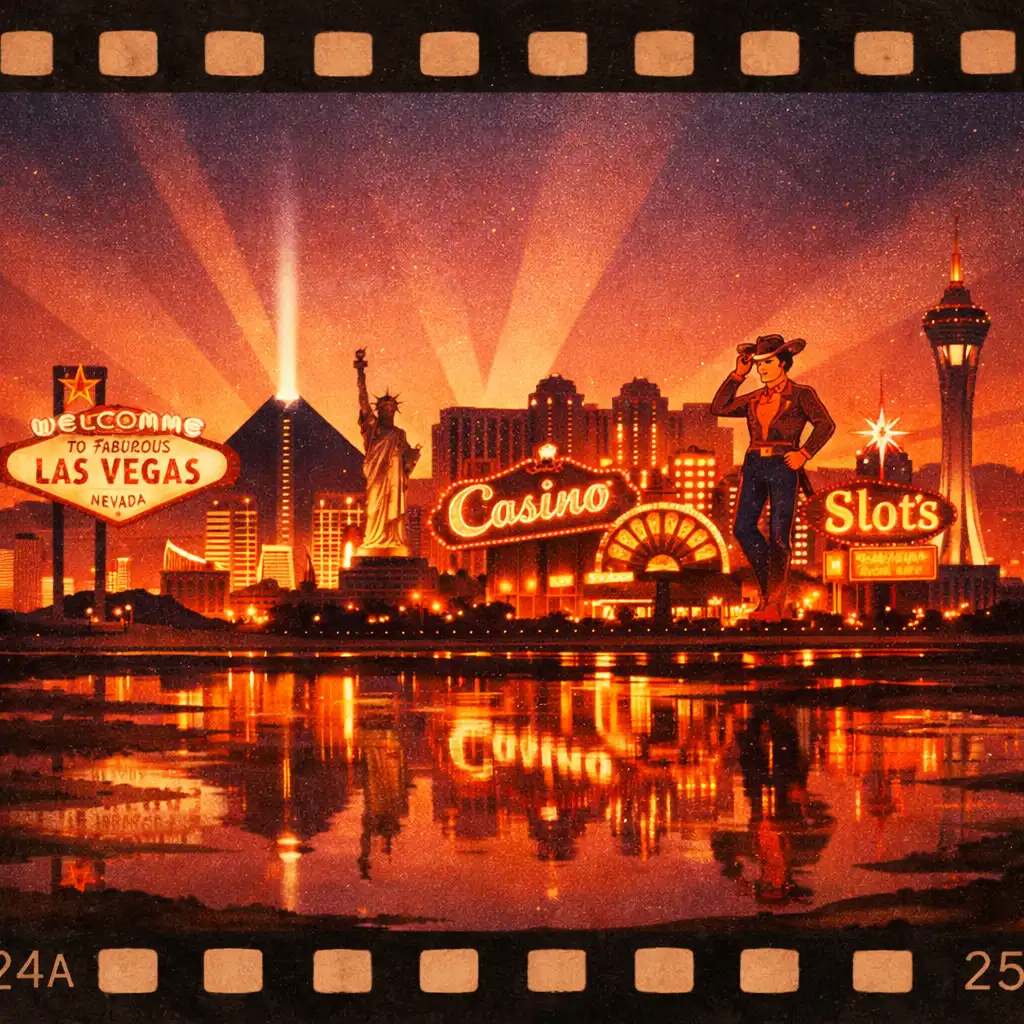
On screen, Las Vegas is never merely a place; it is a promise that the next hand could rewrite everything.
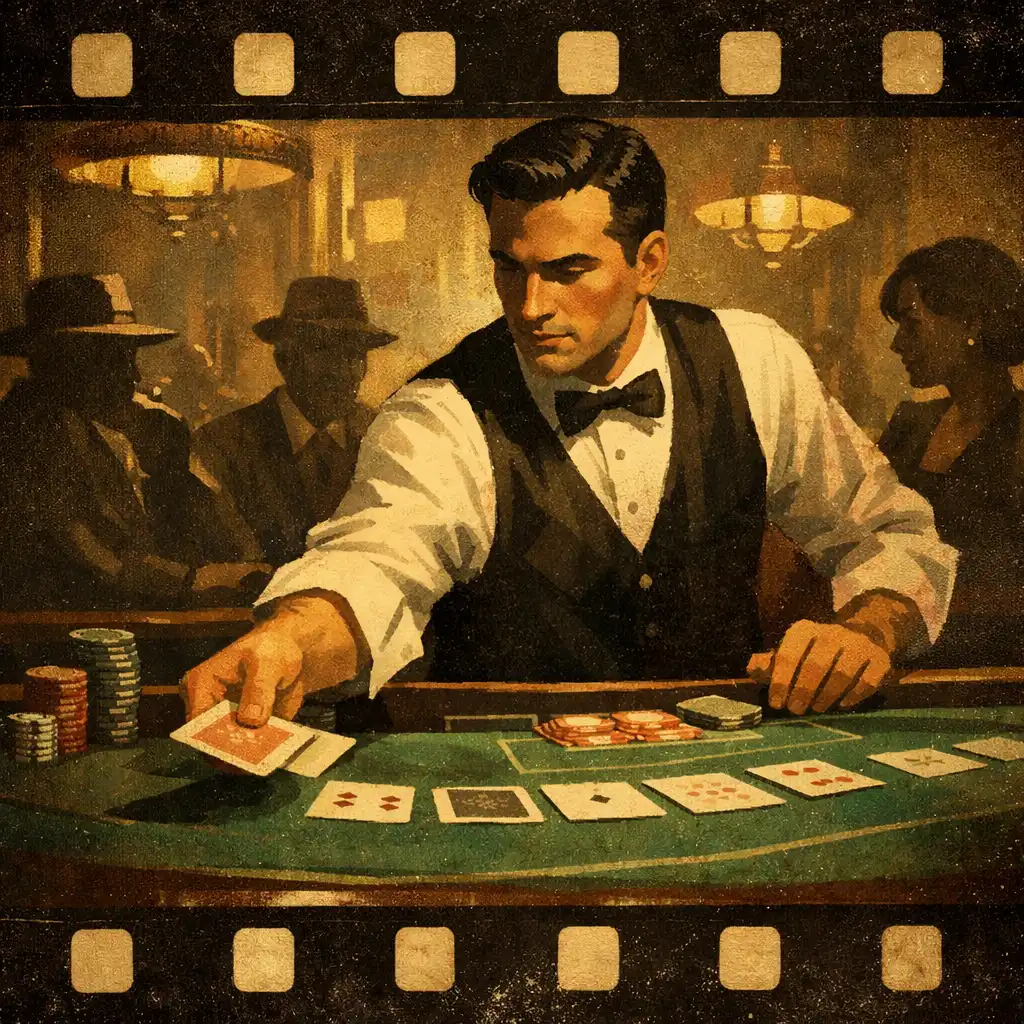
The Casino as a Workplace
Casino films often focus on the people who run and work in the establishment, using their perspectives to explore themes of control, corruption, and survival. The casino manager is often portrayed as a figure of authority, sometimes sympathetic, sometimes villainous. Dealers are frequently depicted as neutral observers or as participants in the drama. Players range from naive tourists to hardened professionals, each representing different relationships with risk.
Shifting Moralities
The moral alignment of these characters has shifted over time, reflecting changing attitudes toward gambling and authority. Early films often presented clear moral distinctions between honest and dishonest characters. Later films blurred these lines, presenting more complex, morally ambiguous figures.
The Casino as a Criminal Milieu
Casino films frequently use the gambling environment as a backdrop for crime stories, from small-scale cons to large-scale organised crime operations. The casino's cash-intensive nature makes it a natural setting for theft and fraud. Organised crime's historical involvement in Las Vegas has been a recurring subject. The heist, the con, and the murder mystery are common crime subgenres within casino films.
Moral Complexity
Crime narratives in casino films often blur the line between law enforcement and criminality, reflecting broader societal anxieties about corruption. The casino can be portrayed as a corrupting influence on both criminals and authorities. The resolution of crime stories often involves a critique of the system rather than a simple restoration of order.
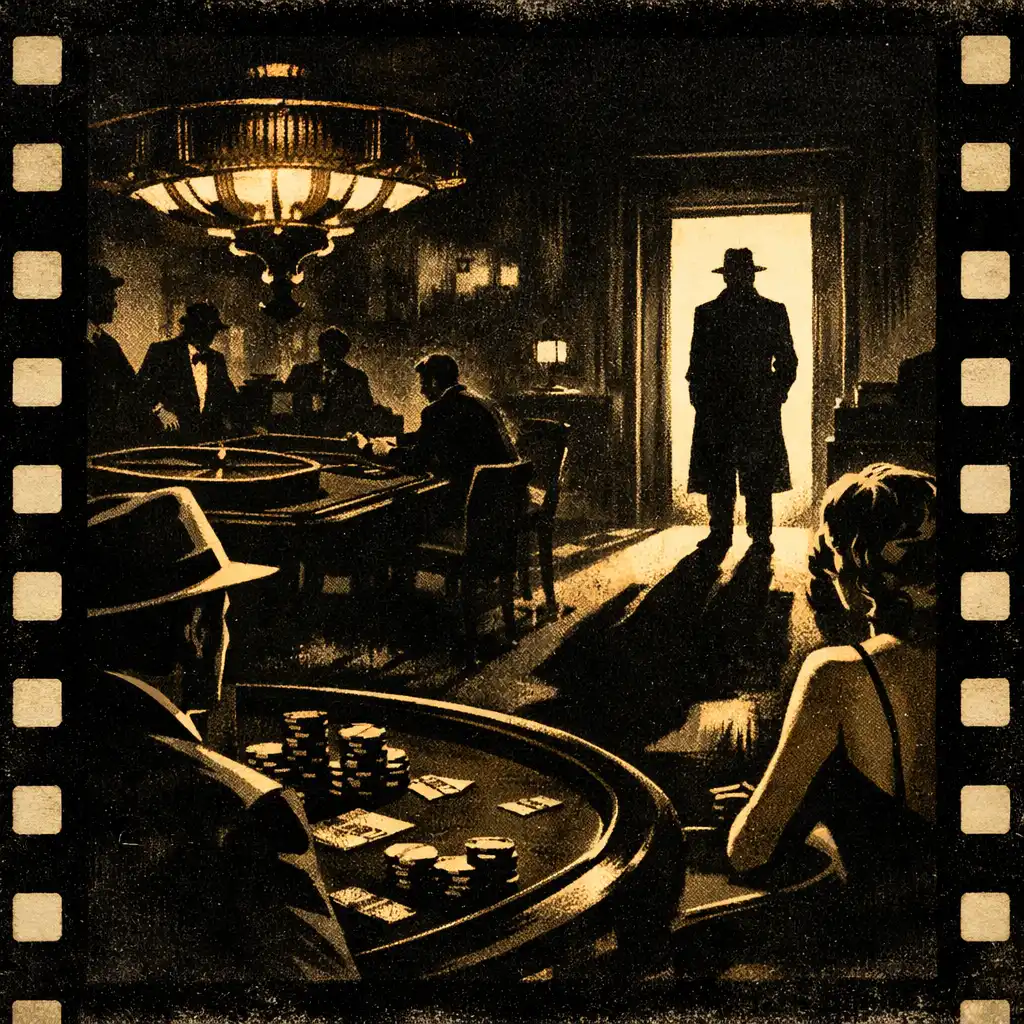
The casino crime story asks not only who wins, but what the house has already taken from everyone at the table.
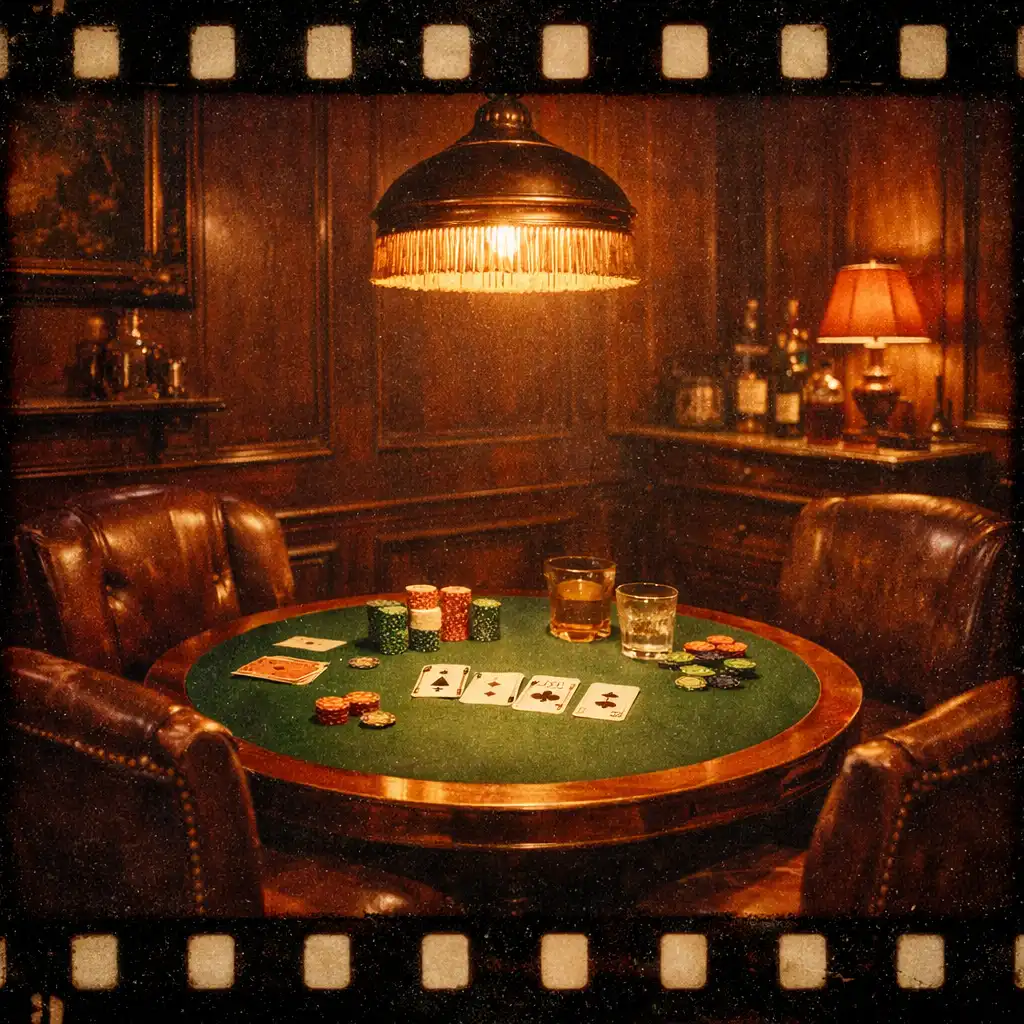
Intimacy vs. Scale
Casino films have moved between intimate, private settings and grand, public spectacles, each offering different dramatic possibilities. Private card rooms often allow for intense character-focused drama. Large casino floors provide opportunities for visual spectacle and ensemble storytelling. The shift reflects broader changes in the gambling industry and audience expectations.
The Architecture of Drama
The physical space of the casino—whether a cramped backroom or a vast hall—shapes the narrative and the characters' interactions. Close quarters can heighten tension and force confrontations. Open spaces can emphasise isolation or the overwhelming nature of the gambling environment.
From Functional Spaces to Themed Fantasies
Casino architecture on screen has shifted from simple, functional spaces to elaborate themed environments that serve as visual metaphors for the gambling experience. Early films often depicted casinos as straightforward gambling halls. The rise of Las Vegas themed resorts in the 1990s led to more fantastical on-screen depictions. Architecture can reflect the era's design trends and cultural values.
Space as Symbol
The design of casino spaces often carries symbolic weight, representing themes of illusion, excess, or control. The labyrinthine layout of many casinos can be read as a metaphor for the gambler's entrapment. The opulence of the architecture often contrasts with the desperation of the characters.
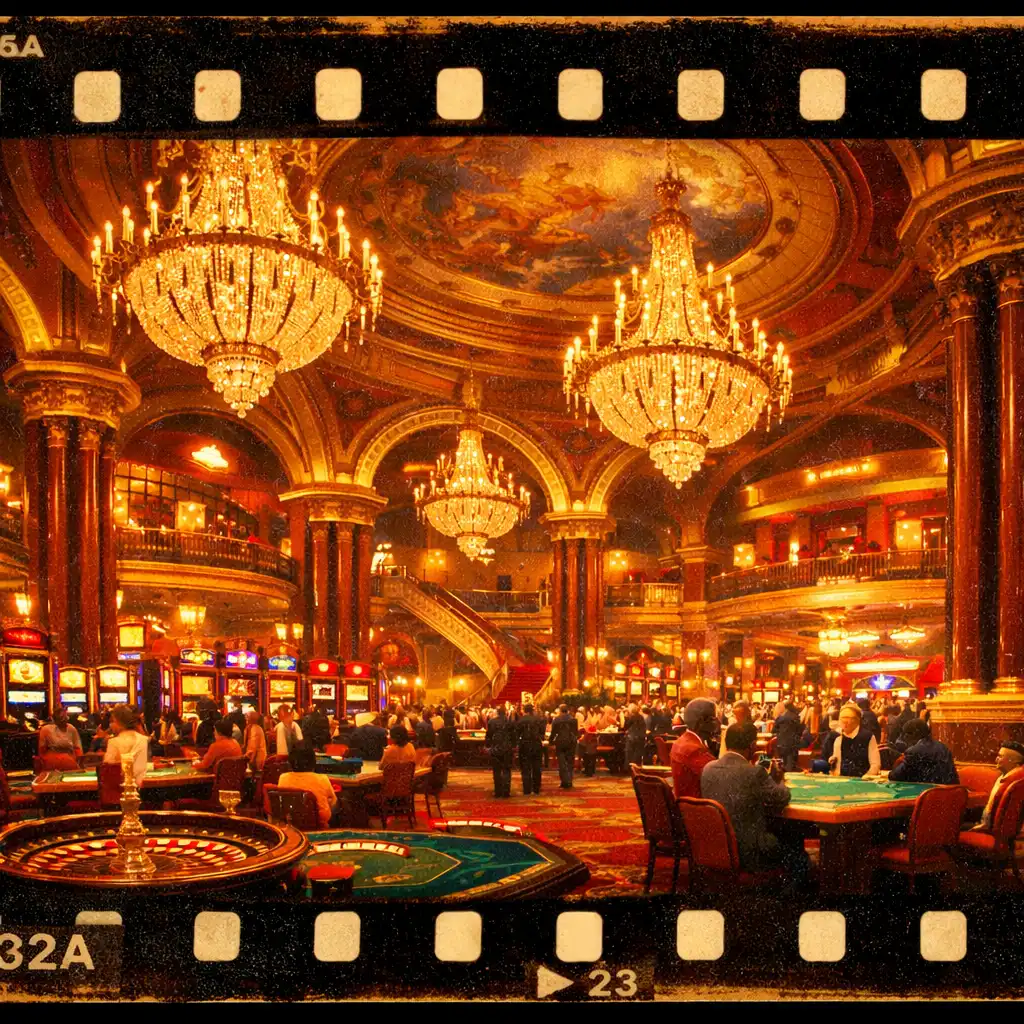
The grand casino interior is a promise of abundance that often frames the quietest moments of loss.
Further Reading
Each theme on this page is explored in greater depth across Cinema Legacy's era pages, film retrospectives, and icon profiles. Use the links below to continue your journey through the history of casino and poker cinema.