A Chronological Archive of Casino and Poker Cinema

Cinema Legacy's Films archive gathers retrospectives of genuine films that have shaped how casinos, poker rooms, and gambling environments appear on screen. The archive is organised by era and cross-era connections, not by release date alone. Each film is examined through its historical context, visual identity, and narrative function of the casino or poker setting. The archive includes films from the classical Hollywood period to contemporary cinema, and cross-era relationships are highlighted to show how screen representations evolved over time. The archive covers films from the silent era to the present.

Film Eras at a Glance

The archive spans several distinct eras of film history, each with its own visual and narrative conventions for depicting casinos and poker. Silent Era and early sound films established visual shorthand for gambling dens. Classical Hollywood refined the casino as a glamorous backdrop for crime and romance. New Hollywood brought grittier, more psychological portrayals. Contemporary cinema expanded into high-stakes poker spectacles and global heist narratives.

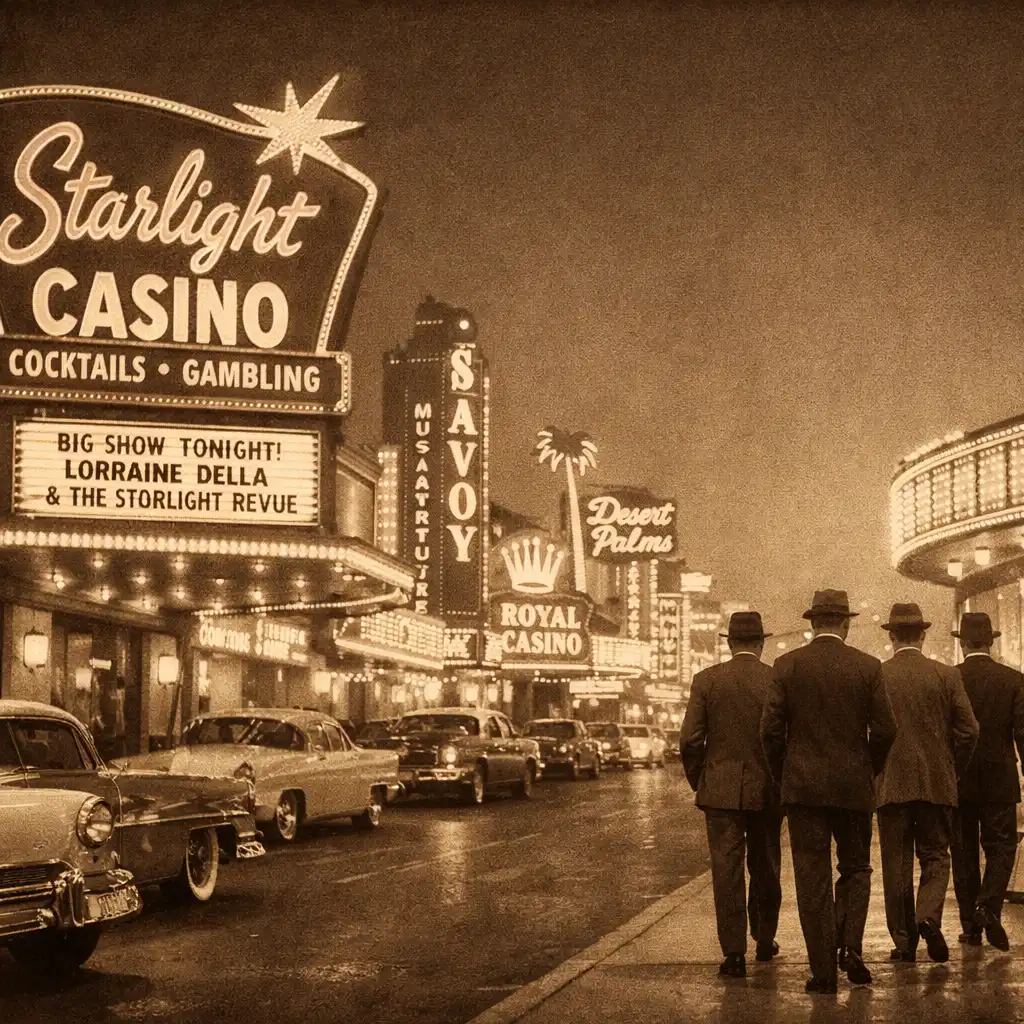
Vintage Las Vegas Strip at night with glowing neon signs and well-dressed men walking toward a casino entrance
Ocean's 11 (1960) — Las Vegas Strip

Ocean's 11 (1960)

Classical Hollywood

The Rat Pack Heist as a Vegas Time Capsule

Ocean's 11 (1960) captures the glamour and excess of Las Vegas at the turn of the 1960s, using the casino heist as a vehicle for star power and light comedy. The film's casino settings are real Las Vegas establishments, lending authenticity. The heist plot is secondary to the ensemble's charisma and the spectacle of the Strip. The film can be read as a celebration of Vegas as a playground for the famous. Directed by Lewis Milestone, it stars Frank Sinatra, Dean Martin, Sammy Davis Jr., Peter Lawford, and Joey Bishop.

Read retrospective
From Rat Pack Charm to Precision Ensemble

The 2001 remake of Ocean's Eleven reimagines the heist as a sleek, technology-driven operation, reflecting changes in both filmmaking style and the cultural perception of Las Vegas. The 1960 film emphasises star charisma and improvisational energy. The 2001 film foregrounds meticulous planning and ensemble precision. Both films use the casino as a symbol of wealth and risk, but the later film treats it with more irony. Ocean's Eleven (2001) was directed by Steven Soderbergh and stars George Clooney, Brad Pitt, Matt Damon, and Julia Roberts.

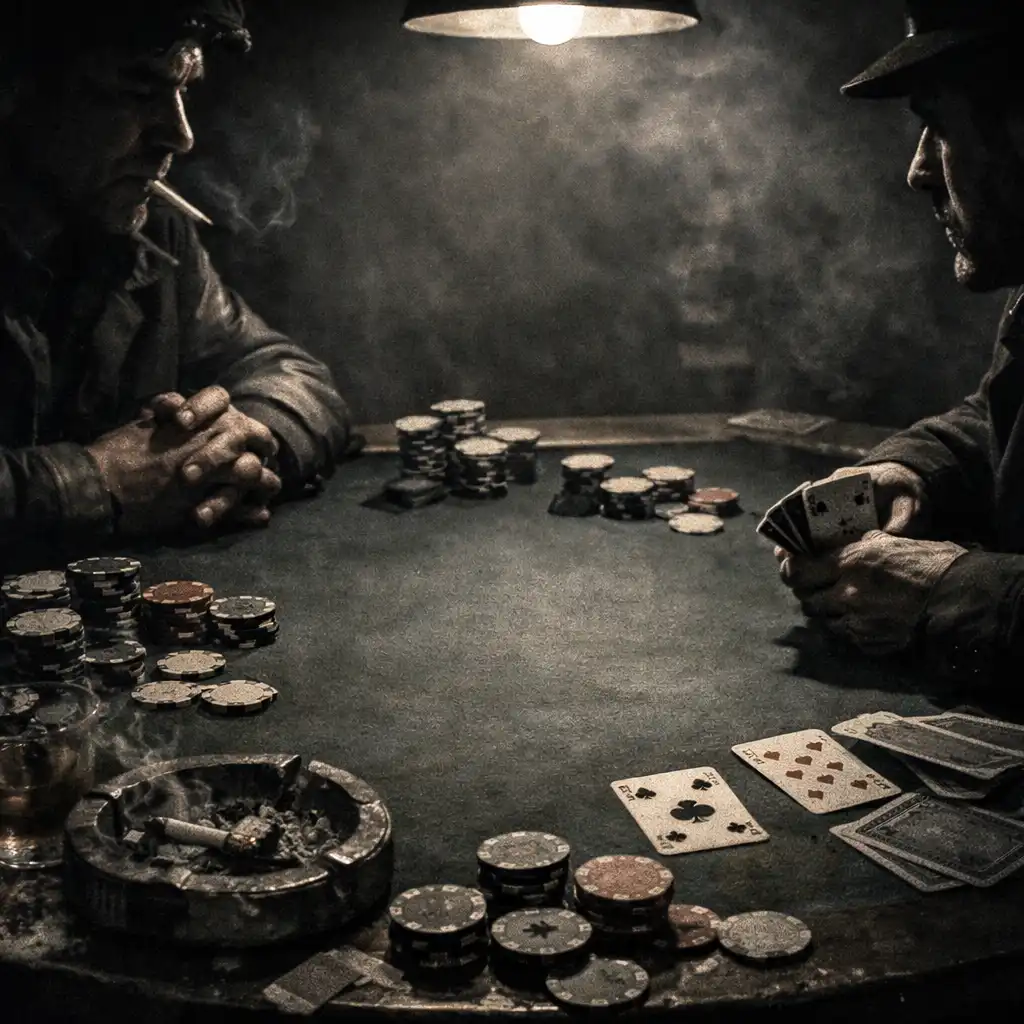
Dimly lit poker table with scattered chips and two men in shadow, evoking 1970s American cinema
California Split (1974) — Poker Table

California Split (1974)

New Hollywood

The Gambler's High and Its Costs

California Split (1974) explores the compulsive side of gambling through the friendship of two men chasing the next big win, moving away from the glamorous casino settings of earlier films. The film's casino and poker room scenes emphasise the psychological pull of risk. It uses overlapping dialogue and naturalistic performances to create a sense of immersion. The ending can be read as a commentary on the emptiness of the gambling high. Directed by Robert Altman, it stars George Segal and Elliott Gould.

Read retrospective
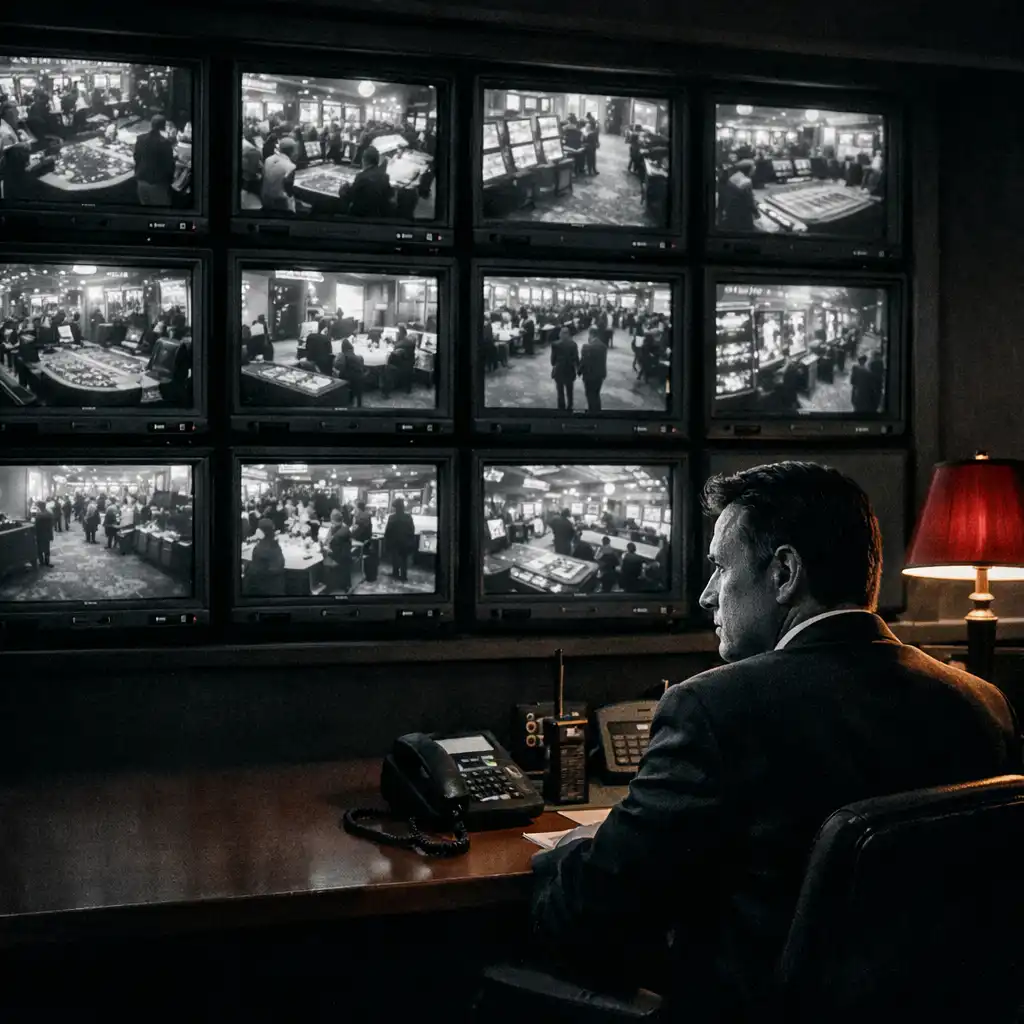
Casino surveillance room with multiple monitors and a man in a suit watching the screens
Casino (1995) — Surveillance Room

Casino (1995)

Contemporary

The Casino as a System of Control

Casino (1995) depicts the Las Vegas casino as a tightly controlled system where money, power, and violence intersect, offering a stark contrast to the glamorous heist films of earlier decades. The film's detailed portrayal of casino operations reflects the era's fascination with institutional corruption. It uses voice-over narration and rapid editing to convey the overwhelming scale of the enterprise. The casino setting functions as both a workplace and a battlefield. Directed by Martin Scorsese, it stars Robert De Niro, Sharon Stone, and Joe Pesci.

Read retrospective
Close-up of poker chips and playing cards on green felt with a hand reaching for a card
Rounders (1998) — Poker Chips

Rounders (1998)

Contemporary

Poker as a Test of Character

Rounders (1998) portrays poker as a mental and moral challenge, set in the underground card rooms of New York, and helped popularise the image of the skilled poker player. The film's poker scenes emphasise strategy and psychology over luck. It draws on the real-world poker boom of the late 1990s. The protagonist's journey can be read as a redemption narrative built around self-control. Directed by John Dahl, it stars Matt Damon, Edward Norton, and John Malkovich.

Read retrospective

From Underground Rooms to High-Stakes Spectacle

After Rounders, poker films increasingly focused on high-stakes tournaments and the personalities behind them, reflecting the poker boom of the 2000s and the rise of celebrity players. Rounders emphasised underground card rooms and personal stakes. Later films like Molly's Game (2017) explore the exclusive world of high-stakes private games. The shift mirrors changes in poker's public image from niche subculture to mainstream entertainment. Molly's Game (2017) was directed by Aaron Sorkin and is based on the memoir of Molly Bloom.

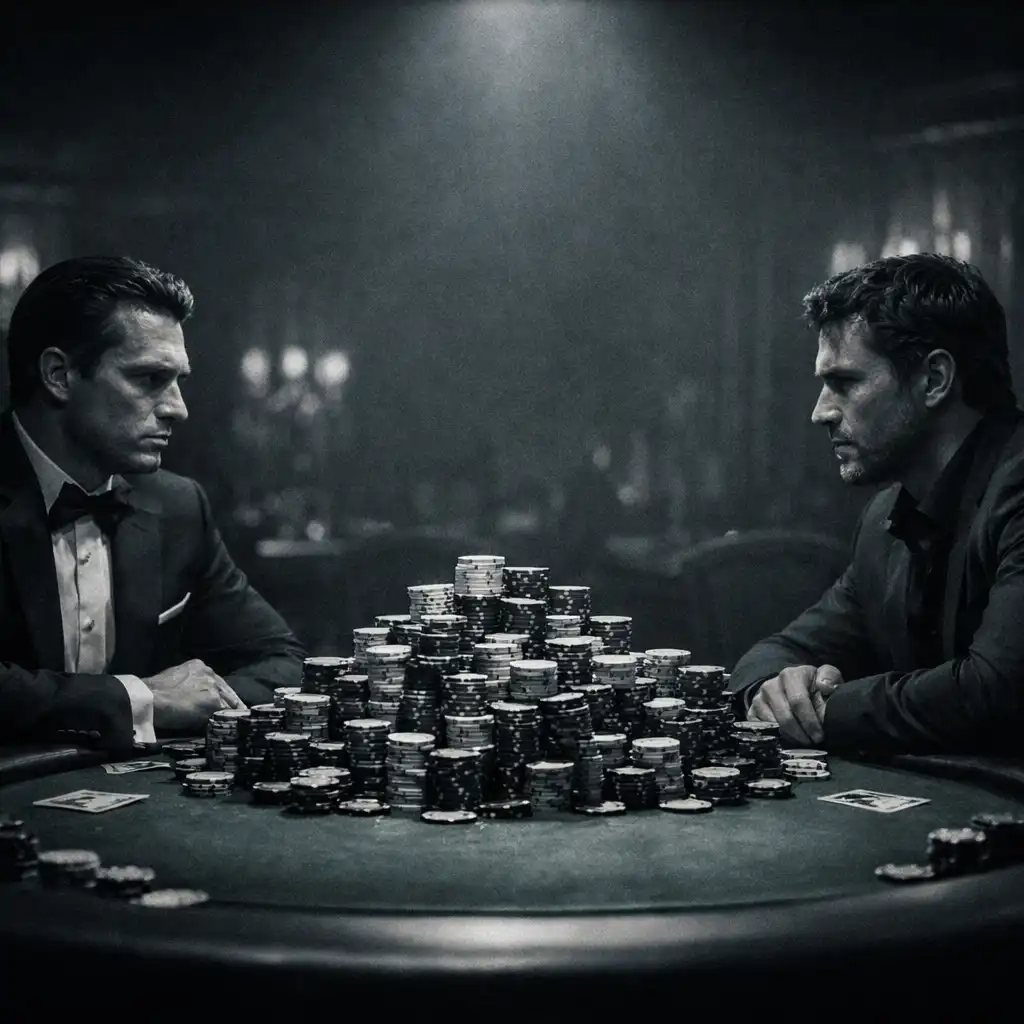
High-stakes poker table in a dimly lit European casino with two men facing each other
Casino Royale (2006) — Poker Duel

Casino Royale (2006)

Contemporary

Poker as a Battlefield of Wits

Casino Royale (2006) transforms a high-stakes poker game into a tense psychological duel, using the card table as a stage for Bond's vulnerability and resilience. The poker scenes are structured as action sequences, with close-ups and strategic pauses. The film strips away the glamour of earlier Bond casino scenes, emphasising risk and consequence. The setting in Montenegro adds a European, old-world atmosphere to the game. Directed by Martin Campbell, it stars Daniel Craig, Eva Green, and Mads Mikkelsen.

Read retrospective

The Films archive is best explored through the Eras and Themes pages, which group films by historical period and recurring motifs. Each film page also includes cross-references to related retrospectives. The Eras page organises films chronologically with year markers. The Themes page groups films by motifs such as 'casino heist', 'poker room', and 'gambling addiction'. Each film page includes a 'Related Era Essays' section for deeper context.