
A Chronology of Casino and Poker Imagery
Cinema Legacy is organised around eras because the screen representation of casinos, poker, and gambling has never been static. Each decade brought new filmmaking styles, cultural anxieties, and narrative possibilities, and grouping films by period reveals those shifts more clearly than a simple list of titles.
The archive covers seven decades, from the 1960s to the 2020s, with each era treated as an editorial unit rather than a rigid historical boundary. Eras are defined by a combination of release dates, dominant filmmaking trends, and recurring motifs, not by a single film or director. This page provides an overview of each era; detailed essays and film entries are linked from the Films and Themes pages.
Each decade section on this page follows the same structure: a brief contextual note, a list of key films, and an editorial observation about how casino and poker imagery functioned in that period. The observations are Cinema Legacy’s interpretation, grounded in the films themselves, and are not presented as definitive historical claims. Contextual notes summarise the broader film-industry and cultural conditions that shaped the decade’s output. Key film lists are selective, not exhaustive; they highlight works that are particularly relevant to the archive’s themes. Editorial observations use careful phrasing such as “the film can be read as” or “within this retrospective” to distinguish interpretation from established fact.
The Age of Glamour
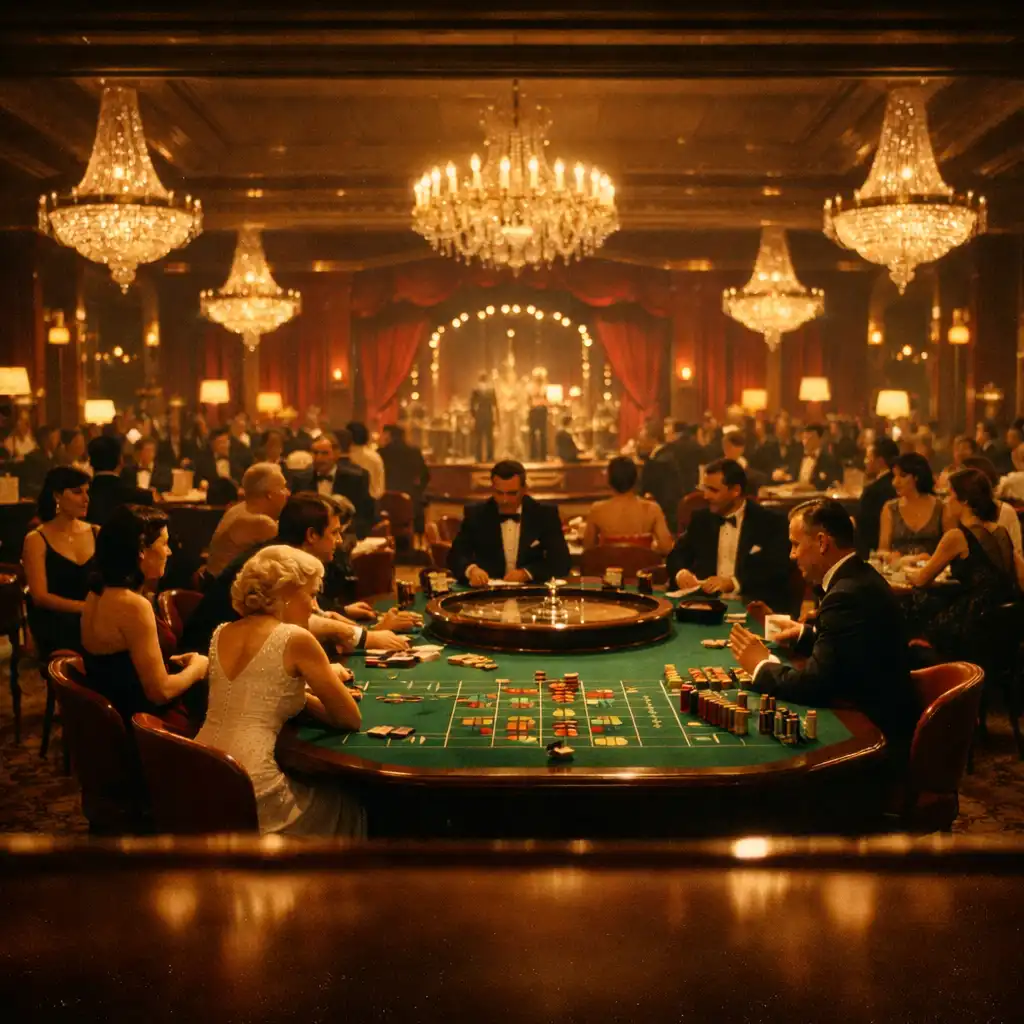
In the 1960s, casino settings often functioned as backdrops for stories of sophistication, risk, and high-stakes drama. The decade’s films frequently emphasised the visual allure of the casino floor—chandeliers, tuxedos, and the ritual of the card table—rather than the psychological depths of gambling addiction. The decade saw a rise in big-budget productions that used Las Vegas and Monte Carlo as locations for spectacle. Casino sequences were often choreographed as set pieces, with the camera lingering on the architecture and the social dynamics of the room. Poker and baccarat scenes served to establish character status and tension, rather than to explore gambling as a theme in itself.
Key Films of the 1960s
- Ocean’s 11 (1960) — established the ensemble heist formula with a Las Vegas backdrop, though its tone is more caper than thriller.
- Casino Royale (1967) — a fragmented, star-studded parody that includes extended baccarat sequences.
- The Cincinnati Kid (1965) — focused on poker as a test of character and skill.
Within this retrospective, the 1960s can be read as a period when casino imagery was primarily decorative—a signifier of wealth and excitement rather than a subject for moral inquiry. The films of this era rarely interrogated the consequences of gambling, instead using the casino as a stage for star power and narrative contrivance.
The Turn Inward
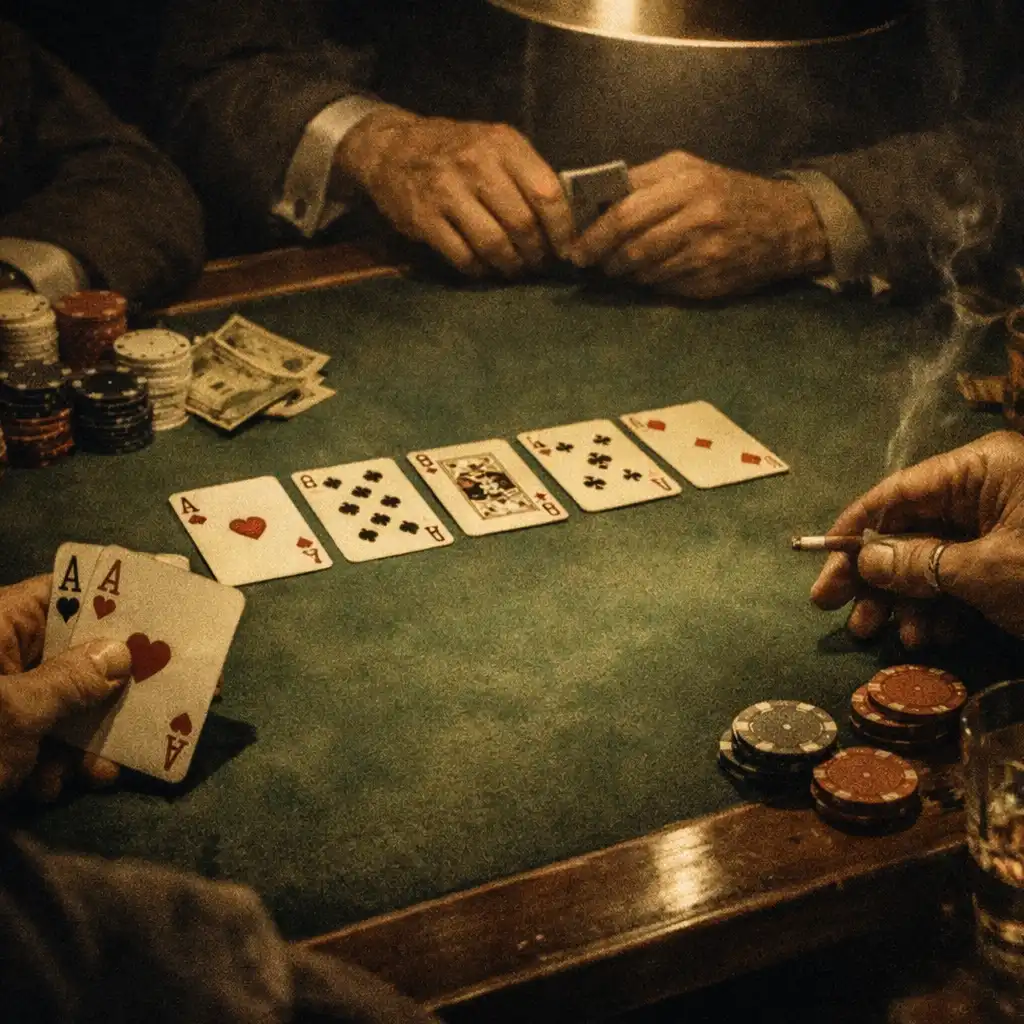
The 1970s saw a shift away from the glossy spectacle of the previous decade toward more intimate, character-focused gambling stories. Films of this period often used poker and casino settings to explore obsession, failure, and the American Dream’s darker edges. The rise of New Hollywood brought a grittier, more naturalistic visual style to gambling films. Poker scenes became less about glamour and more about psychological warfare between characters. Casino settings were often portrayed as environments of moral ambiguity rather than pure escapism.
Key Films of the 1970s
- The Gambler (1974) — stars James Caan as a literature professor whose gambling spirals out of control.
- California Split (1974) — directed by Robert Altman, known for its loose, naturalistic style and overlapping dialogue.
- The Sting (1973) — while focused on con games, includes significant card-playing sequences.
Within this retrospective, the 1970s can be read as the moment when gambling on screen became a vehicle for character study rather than plot mechanics. The films of this era often resist easy moral judgments, instead presenting gambling as a symptom of deeper personal and social fractures.
A Decade of Transition
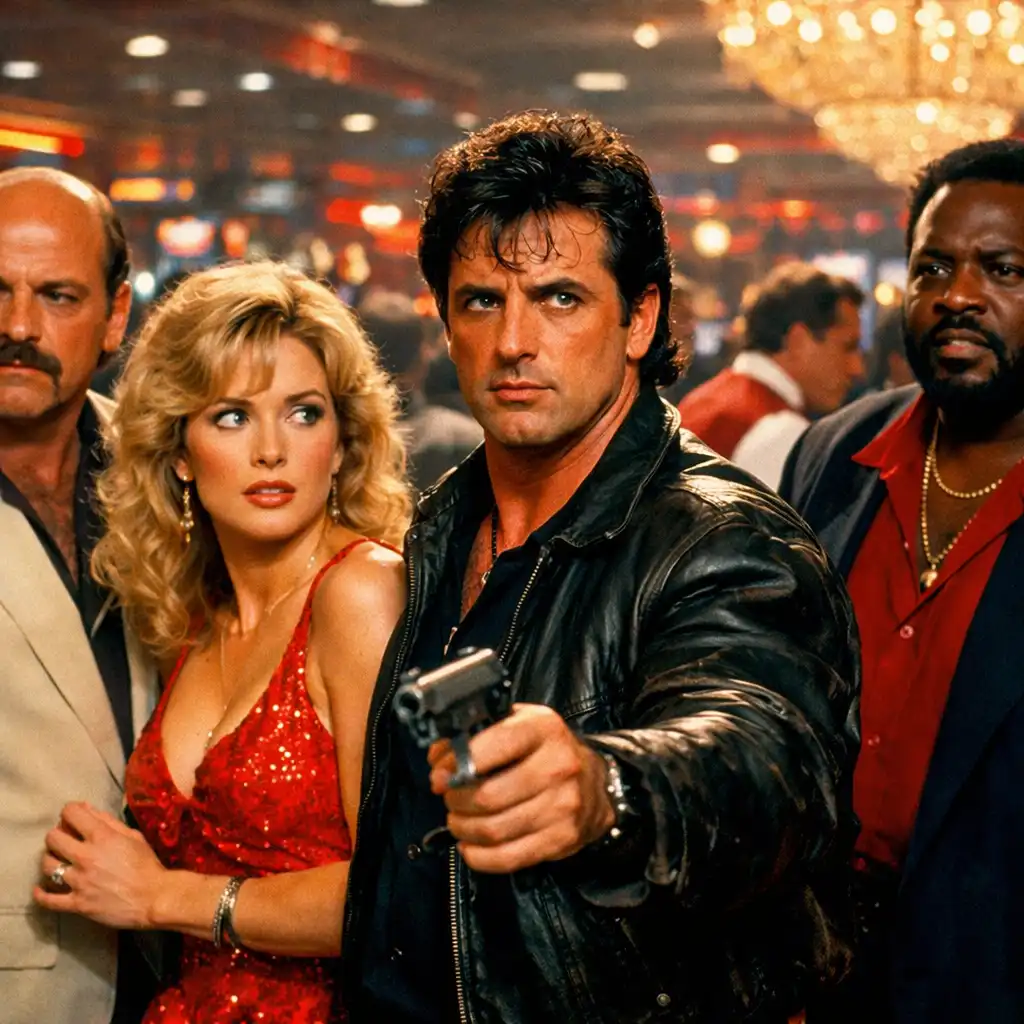
The 1980s produced fewer films centred on casinos or poker than the preceding decades, as Hollywood shifted toward blockbuster spectacle and high-concept premises. However, a handful of works used gambling imagery in ways that remain relevant to this archive. The decade’s dominant genres—action, science fiction, and teen comedy—rarely foregrounded casino settings. When casinos did appear, they were often used as backdrops for action sequences or as symbols of excess. The most relevant works of the period tend to be crime dramas or character pieces that use gambling as a plot device.
Key Films of the 1980s
- Atlantic City (1980) — directed by Louis Malle, uses the fading resort town as a metaphor for lost dreams and criminal aspiration.
- The Color of Money (1986) — focuses on pool rather than cards but shares thematic concerns with gambling narratives.
Within this retrospective, the 1980s can be read as a period when casino imagery was largely absorbed into broader crime and action narratives, losing the distinct thematic focus it had in the 1970s. The few relevant films of the decade treat gambling as a symptom of larger social and economic shifts.
The Dark Turn
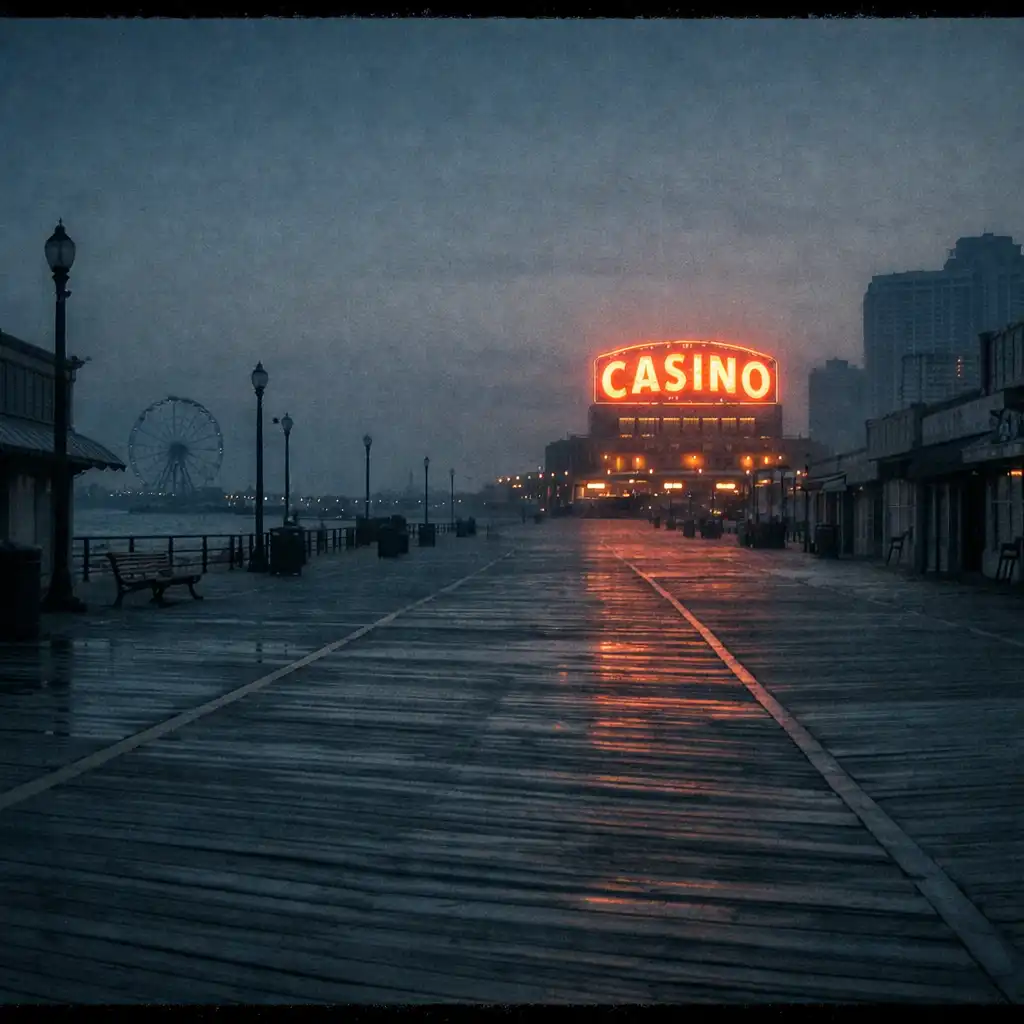
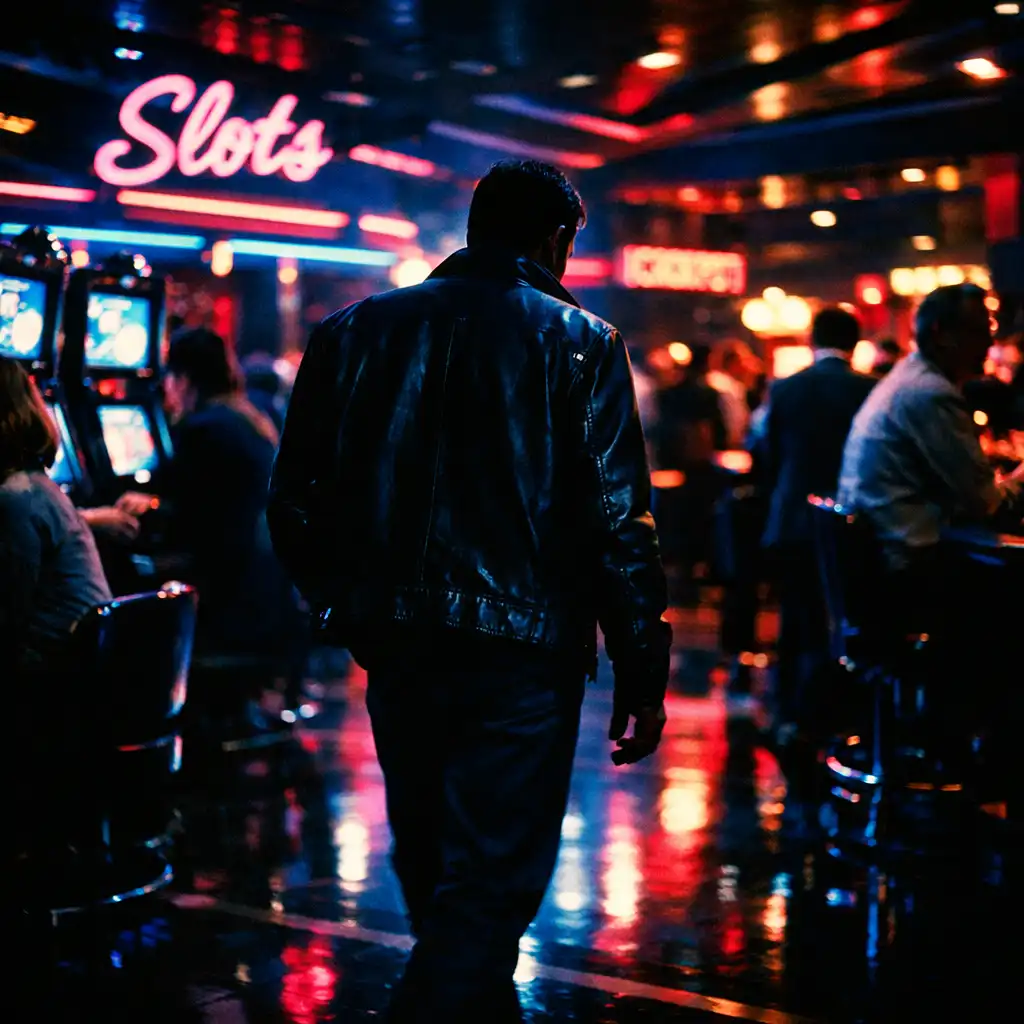
The 1990s saw a resurgence of casino films, but with a markedly darker tone than the 1960s. These films often depicted the casino industry as corrupt, violent, and morally compromised, reflecting broader anxieties about organised crime and corporate greed. The decade’s most influential casino film, Casino (1995), is a sprawling epic that traces the rise and fall of a Las Vegas casino operator. Poker and gambling scenes in 1990s films frequently emphasised the psychological pressure and ethical compromises of professional play. The visual style of these films often leaned toward neon-lit, high-contrast imagery, contrasting with the warm glamour of earlier decades.
Key Films of the 1990s
- Casino (1995) — directed by Martin Scorsese, based on the non-fiction book by Nicholas Pileggi.
- Rounders (1998) — helped popularise Texas Hold’em and the image of the professional poker player.
- Hard Eight (1996) — Paul Thomas Anderson’s debut feature, using a casino setting for a character-driven crime story.
Within this retrospective, the 1990s can be read as the decade when the casino film became a vehicle for exploring institutional corruption and the American Dream’s dark side. The films of this era often present gambling not as a personal failing but as a symptom of a rigged system.


The Spectacle Returns
The 2000s brought a renewed interest in casino heists, but with a glossy, high-tech sheen that contrasted with the gritty crime dramas of the 1990s. At the same time, the poker boom—fuelled by televised tournaments and online play—made poker a mainstream spectator sport. The decade’s most successful casino heist film, Ocean’s Eleven (2001), is a star-studded remake that prioritises style and wit over realism. Poker scenes in 2000s films often reflected the game’s new cultural status, with characters discussing strategy and odds. The visual style of these films leaned toward sleek, polished compositions, with an emphasis on ensemble casts and elaborate set pieces.
Key Films of the 2000s
- Ocean’s Eleven (2001) — directed by Steven Soderbergh, established the modern template for the casino heist.
- Casino Royale (2006) — features a Texas Hold’em tournament as the central set piece.
- 21 (2008) — dramatises the MIT blackjack team’s card-counting exploits.
Within this retrospective, the 2000s can be read as the decade when casino imagery became fully integrated into franchise entertainment, prioritising spectacle and star power over moral inquiry. The poker boom also shifted the screen portrayal of poker from a character trait to a competitive sport.
The Inward Gaze
The 2010s saw a move away from the polished heists of the 2000s toward more character-driven, often biographical gambling stories. Films of this period frequently focused on the psychological toll of professional gambling and the personal costs of addiction. The decade’s most notable gambling film, Molly’s Game (2017), is based on the memoir of Molly Bloom, who ran high-stakes underground poker games. Poker and casino scenes in 2010s films often served as windows into character psychology rather than as set pieces. The visual style of these films tended toward naturalism, with an emphasis on performance and dialogue over spectacle.
Key Films of the 2010s
- Molly’s Game (2017) — directed by Aaron Sorkin, notable for rapid-fire dialogue and moral compromises.
- The Gambler (2014) — a remake that updates the 1974 original for a contemporary audience.
- Mississippi Grind (2015) — a road movie about two gamblers chasing a winning streak.
Within this retrospective, the 2010s can be read as a period of consolidation, when gambling films returned to the character-driven intensity of the 1970s but with a more explicit focus on biography and real-life figures. The decade’s films often present gambling as a lens through which to examine ambition, gender, and class.

An Era in Progress
The 2020s are still unfolding, and Cinema Legacy approaches this period with caution. Only a small number of films from the decade so far are directly relevant to the archive’s themes, and any observations about emerging trends must be tentative. The decade has not yet produced a defining casino or poker film comparable to Casino or Rounders. Relevant works so far tend to be smaller-scale, character-driven stories or documentaries. Cinema Legacy will update this section as new films are released and their significance becomes clearer.
Key Films of the 2020s
- The Card Counter (2021) — directed by Paul Schrader, uses poker as a metaphor for guilt and redemption.
- Casino Jack (2021) — a documentary about a gambling scandal, relevant to the archive’s themes.
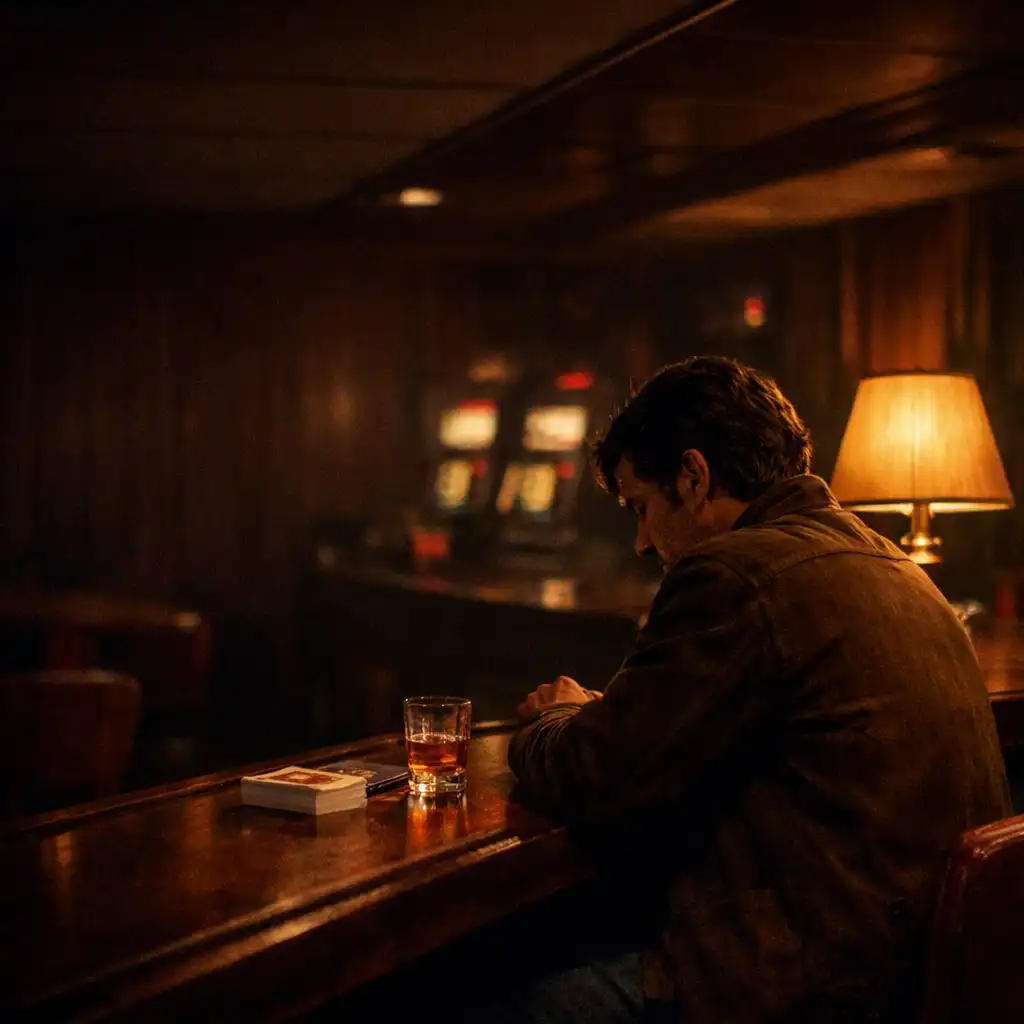
Within this retrospective, the 2020s can be read, tentatively, as a period of introspection, with gambling films focusing on solitary figures and moral reckoning rather than ensemble heists or glamorous settings. However, this observation is provisional and subject to revision as the decade progresses.

A Note on Method
The Eras page is designed as a starting point for exploring Cinema Legacy. Each decade section links to related film entries and thematic essays, allowing visitors to move between chronology and motif. The archive is deliberately evergreen, so new films may be added to existing eras as their significance becomes clear. Use the era navigation to jump between decades, or read the page sequentially to follow the historical arc. For deeper dives, visit the Films page for individual entries or the Themes page for cross-era motifs. Cinema Legacy does not provide gambling advice or promote any casino, poker room, or betting service.